The Land Trap
The world's oldest asset rests at the heart of the modern economy

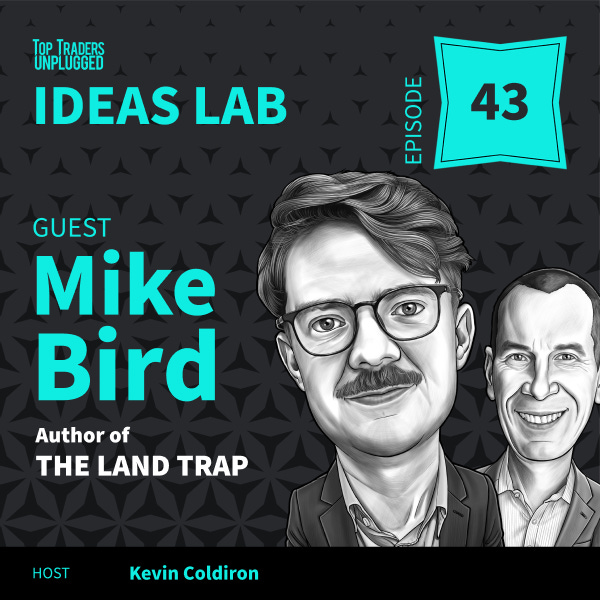
Trivia question: In the 1890’s, what book sold the most copies in the US after the Bible?
Did you immediately think - ahh, that must be Progress and Poverty: An Inquiry into the Cause of Industrial Depressions and of Increase of Want with Increase of Wealth by Henry George? Me neither. In fact, before reading Mike Bird’s new book The Land Trap, I had not even heard of Henry George.
Forgotten, But Not Gone
George wrote his book as modern world was beginning to emerge. Technology was improving communication, production and transport, yet poverty was all around. George pinned the problem on land. When innovations boosted production, landlords who had done nothing to create the technology, just raised the rent. When new infrastructure was built, land prices surged, making landowners wealthy at the expense of the people who had built it. And the frequent financial panics always seemed to involve land speculation gone bad.
Land was the world’s oldest asset, but the drivers of its value had shifted. In an industrial world, land derives its value from the economic activity around it, not what the land itself produces. The “trap” in Bird’s title arises as economies become politically and financially locked into rising land values. Governments rely on property taxes or sales for revenue. Homeowners have the majority of their net worth in land, almost always purchased with borrowed money. And land represents by far the biggest source of collateral for loans, putting it at the heart of the financial system.
This makes higher land prices desirable for many. But higher prices reinforce inequality, locking low-income citizens out of the housing market and making it difficult to live in areas with the best job potential. Since land values aren’t driven by what owners do, but what happens around them, this divide is driven mainly by luck. Even those who do own property often can’t extract much value from its appreciation. They can sell - but then must downsize or move, in the latter case sacrificing friendships and maybe job opportunities. Or they can borrow against increased values, but debt adds fragility and uncertainty. For an excellent examination of this, read Mike Green’s post today on Substack.
If you want to start or expand a business, it’s a huge advantage to own property that can be used as collateral for a loan. For example, my friend owns a small apparel manufacturing company. When her business grows, she needs to finance more working capital. Despite being in business for two decades, surviving the GFC and manufacturing locally, banks won’t lend against her cash flow prospects, they insist she pledges her house as collateral. Talk to enough small business owners and you’ll here the same story. If you have ideas but lack property to turn them into businesses, you can’t capture the full value of your human capital. That’s bad for all of us, because we miss out on economic growth, dynamism and the general good feeling that comes with people being able to pursue their ideas.
The Trap Is Global
Bird is the Economist’s Wall Street editor. His writing reflects that - detailed yet crisp. The book examines land globally and the trap pops up almost everywhere regardless of culture or politics.
China’s trap may be the most binding of all. Local governments depend on land sales for revenue, meanwhile households depend on land purchases because they lack other markets to invest their savings. Many of the houses built on that land sit empty, giving China the fun dilemma of having both high housing prices and massive vacancy at the same time.
Evergrande, the giant developer that went bankrupt, built a business sitting in the middle, buying land from local governments and selling it to households. State banks were involved as well, financing the purchases. How will Evergrande’s bankruptcy and the ripple effects get resolved? I suspect that China is recirculating money from its vast current account surplus into the problem, but that’s just speculation1.
Singapore’s Exception
Bird’s book is fun, informative yet a smidge dispiriting. The reason? The universality of the trap.
Is there any country not caught in it? Bird says Singapore is closet. Homeownership rates are around 90% and prices are cheaper relative to incomes than places like Glasgow or Tulsa. About 25% of housing wealth is owned by people in the bottom half of the income distribution.
How have they pulled this off? The Land Reclamation Act, passed in 1966, allowed the government to forcibly purchase private lands at cheap prices2. Today it owns 90% of all land. The government then built apartments, which make up 80% of the housing stock. Those apartments are sold on 99-year leases, giving the owners a secure place to live and an asset that can be passed on to children. Flipping and speculation are prevented by limiting ownership to one unit and requiring a five-year holding period before selling. Subsidized mortgages are available and low income households are eligible for additional support. A smaller, unrestricted private market still exists, and it is one of the most expensive in the world - a glimpse of the trap that might have developed for the whole island.
An instructive model, but not one that will free the rest of us. Singapore was able to design a system from scratch when it became fully independent in 1965 and its reliance on government power would feel unpalatable in most Western countries.
Singapore has successfully separated the value of land from the ownership of the housing asset that sits on it. This isn’t miles away from what George aimed for. He wanted a tax on the value of land, not the value of the entire property. This would incentive owners to develop the land to its full economic potential, say by creating much more housing on it, and punish those who did nothing.
That is a change we could make. Maybe when the YIMBY generation asserts its political voice, the trap will be loosened?
Listen to my interview with Mike Bird on Top Traders Unplugged Ideas Lab podcast series:
Spotify:
Apple Podcasts:
If you know more, or have read work that explores this, please write to me.
This seems punitive to land owners. The idea was that prices paid by the government to acquire land should excluded any value that came from public infrastructure built around it over the previous seven years. I don’t know how this was estimated, and it obviously creates scope for abuse. Still, there is logic in that private owners should not capture rents derived from public investment.